First configuration
The core structure, reusable fittings and initial graphics establish the first-show investment.
 EuropeShare your brief
 Modular exhibition stands work best when the next event is part of the first brief. We plan reusable components, adaptable layouts and refreshed graphics around your show programme, with transport, storage and condition checks included in the discussion.
For exhibitors planning several shows, changing footprints or a repeatable brand presence.
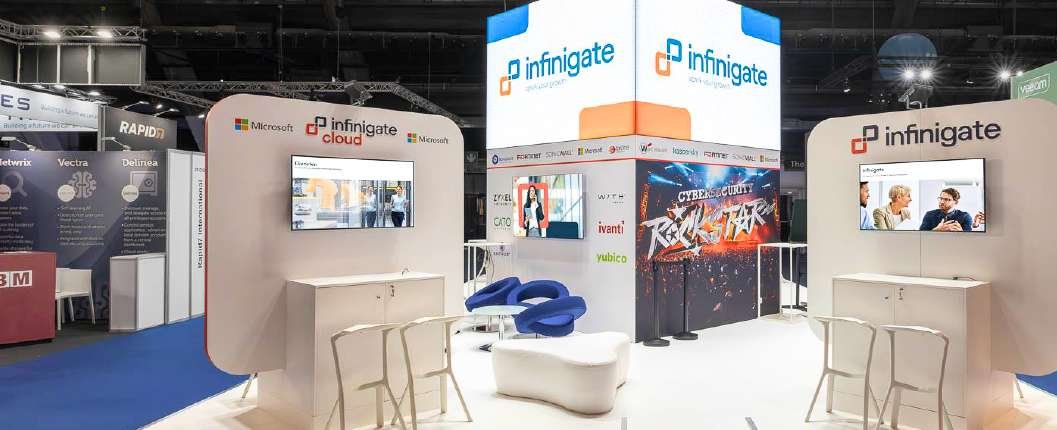
Layout reference: overhead identity, screens and compact conversation areas at Cybersec.
Plan one recognisable brand environment across several exhibitions. A reusable approach starts with the events, footprints and functions you need to support, then identifies the components that can adapt without starting again at every show.
Share confirmed and provisional exhibitions, stand sizes and open sides. The smallest footprint may determine what the core system can contain, while larger shows add meeting space, displays or feature elements. Planning these configurations together makes the trade-offs visible.
Modular does not mean identical. Graphics, lighting, finishes and selected custom features can give a reusable structure its own character. Decide which brand elements stay consistent and which content needs to change between markets or product launches.
Reuse requires more than retaining the structure. Agree component ownership, packing, transport, storage, inspection, repairs and graphics refreshes. The proposal should show how these responsibilities are handled and which costs recur at each exhibition. Environmental savings should only be claimed when measured.
Selected completed Zeno stands show ways to combine branding, displays and meetings. Construction systems and reuse histories are not documented for these pictured projects.
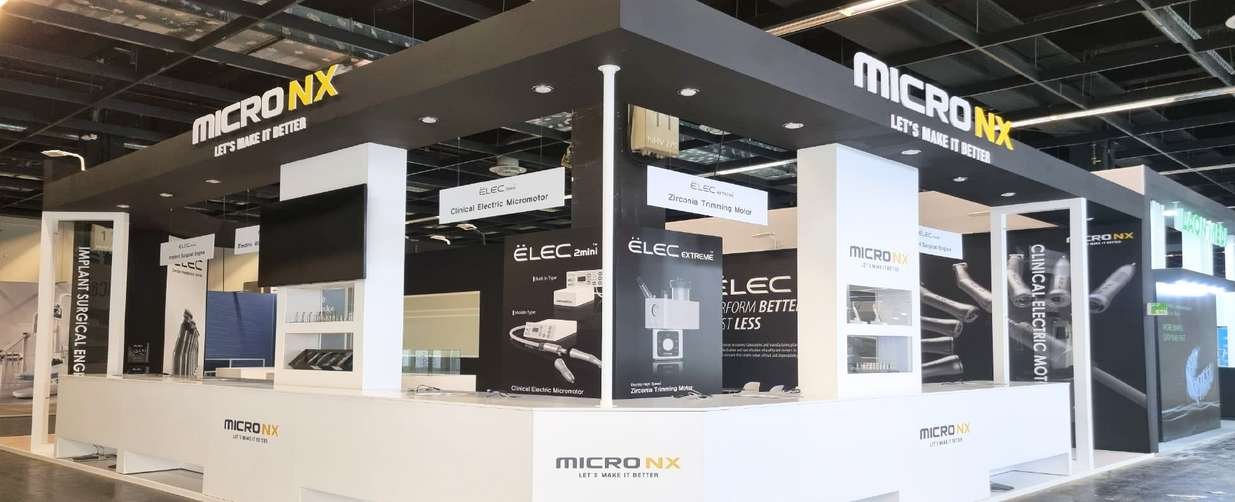
Layout reference: product displays arranged around an open central space.
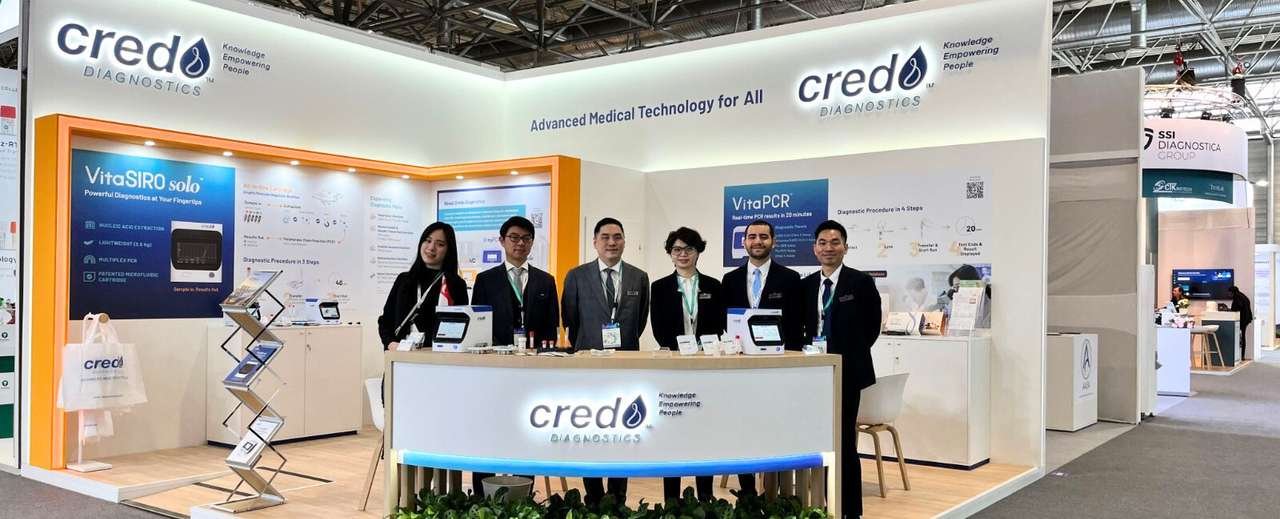
Layout reference: a reception-led footprint with product information and meeting space.
List the smallest and largest spaces you expect to book, their open sides and the content that changes between events. The core configuration needs to function on its own; additional displays or meeting areas can then be assessed for larger footprints. Keep an inventory of retained components so each next layout is based on what is actually available.
Compare the full service scope, including items supplied by your team or ordered separately. The right estimate depends on the requirements of your project.
The core structure, reusable fittings and initial graphics establish the first-show investment.
Allow for layout adaptation, replacement graphics, inspection, transport and installation.
Packing, storage and refurbishment influence the full programme cost and practical value of reuse.
Explore the details before you share your brief.
No. The answer depends on the number of deployments, changing footprints, logistics and refurbishment. Compare the full show programme rather than assuming a lower first-show price.
Often, but the new footprint and organiser requirements need review. A reusable component does not automatically satisfy every event’s height, rigging or access conditions.
Modular describes components designed to combine in different configurations. Portable describes ease of transport and handling. A modular stand may still need professional logistics and installation; confirm the packed size, weight and assembly requirements.
That can be part of the design brief. Graphic attachment, dimensions and material compatibility need to be planned with the chosen system so new campaigns can be accommodated.
No single construction label proves an environmental benefit. The number of uses, materials, transport distances, repairs and end-of-life route all matter. Any savings claim should be supported by evidence for the actual programme.
Venue access, submission dates and organiser services vary by exhibition. Share your actual show details so we can define the requirements for that event.
A stand designed around your brand, products and audience—not selected from a fixed catalogue.
Technical drawings, organiser coordination, fabrication, logistics and installation managed as one delivery plan.
Compare the options and choose the right combination for your exhibition.
Send the show, stand dimensions, dates and objectives. Include what is already agreed and where you need support.