
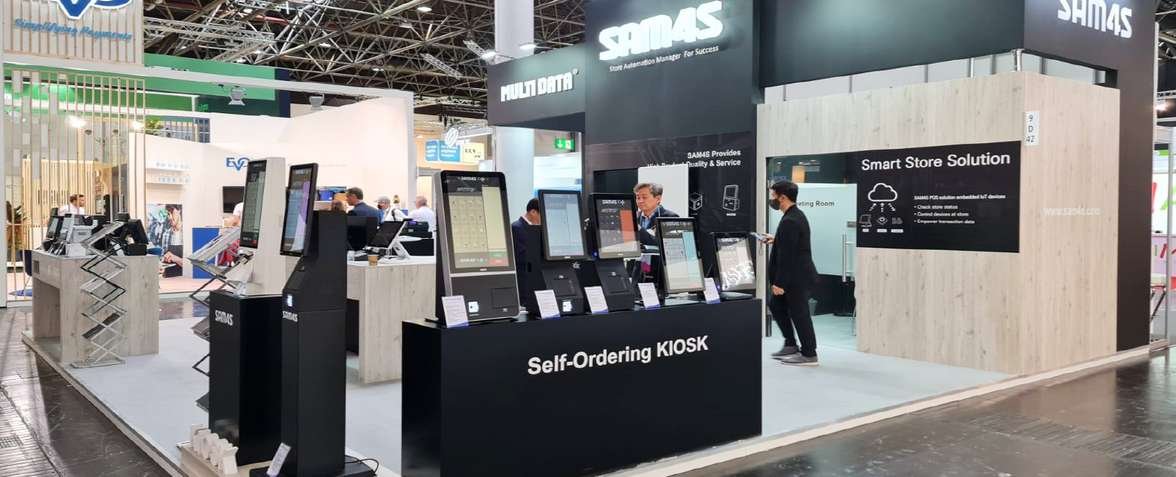
Should you choose a custom, modular or hybrid stand?
Choose a custom stand when the brief needs a distinctive spatial idea shaped around one show and footprint. Choose a modular approach when components need to adapt across repeated events. A hybrid can combine a reusable structure with custom brand features when both flexibility and visual distinction matter.
Start with the exhibition programme
The choice is not simply between an impressive stand and an economical one. It depends on how often you exhibit, how much your stand footprint changes, which elements must travel and how much creative distinction each show needs.
Review the next twelve to twenty-four months of events before choosing a construction route. A stand designed for one flagship launch may justify a different solution from a programme that moves through five venues with different floor spaces.
When a custom stand makes sense
A custom stand begins with the brand, audience, products and specific show objective. Its architecture, materials and visitor journey can be developed around the exact footprint rather than a predetermined component system.
This approach is useful when the stand needs a memorable silhouette, an unusual product presentation, an immersive environment or tightly integrated hospitality and demonstration zones. The trade-off is that future reuse must be designed deliberately; not every bespoke element will adapt efficiently to another footprint.
- A flagship show or product launch carries high brand importance
- The footprint, products or visitor journey need a specific spatial response
- The design must create a distinctive architectural presence
- Future reuse is secondary or can be planned component by component
When a modular stand makes sense
A modular stand uses a planned set of repeatable components that can be assembled in different configurations. The visual result does not have to look generic: finishes, graphics, lighting and feature elements can still be tailored to the brand.
Its strength is adaptability. When the show programme is known early, the system can be planned around common footprints, transport constraints and the elements that need to be refreshed between events.
- The same brand will exhibit at several shows
- Footprints change but share repeatable functional needs
- Consistency, storage and repeat deployment matter
- The team wants to refresh graphics or selected features without rebuilding everything
Use a hybrid when both priorities matter
Many programmes work best with a reusable core and selected custom features. Structure, storage, meeting rooms or display systems can be retained, while a new entrance, overhead element, feature wall or content layer gives each show a specific character.
A hybrid only works when reuse is part of the original brief. Ask which components will be retained, how they fit future footprints, where they will be stored and what inspection or refurbishment is expected before the next event.
Compare the whole programme—not one quotation
A first-show quotation does not reveal the complete commercial picture. Compare design and production with transport, venue handling, installation, dismantling, storage, maintenance, graphics refreshes and adaptation for future spaces.
Also compare responsibility. A lower construction price can become harder to manage if technical development, venue submissions, service orders or on-site coordination sit outside the quoted scope.
Make a component-by-component reuse plan
Ask for a list of the components intended for reuse, the configurations they support and their storage requirements. A reusable frame with single-use graphics and damaged finishes is not the same as a complete stand ready for another deployment.
Record ownership and responsibility for packing, condition checks, repairs and replacement graphics. Keep any environmental claim tied to documented material use and actual reuse rather than assuming that the word modular proves a saving.
Questions to answer before choosing
Ask the design-and-build partner to show how the proposed approach supports the full programme. The answer should connect creative ambition, practical delivery and future use rather than treating them as separate decisions.
- How many shows and footprints are currently confirmed?
- Which elements must remain visually consistent?
- Which parts genuinely need to be unique to one event?
- Where will reusable components be stored and inspected?
- Who manages adaptation, transport, installation and refurbishment?
- What is included and excluded across the full programme?
Compare routes against the same show programme
Create one schedule covering your first show and likely repeat events. For each route, ask what is retained, what must change and what work recurs. Keep unknown future footprints visible rather than assuming every component will fit.
A hybrid route may retain the structure and meeting furniture while changing graphics and a product feature. That is only a useful comparison when adaptation, condition checks, transport and storage are included. The worksheet should describe actual components, not simply label the whole stand reusable.
| Question | What to compare |
|---|---|
| First deployment | Design, fabrication, equipment and installation scope |
| Next footprint | Components that fit, need adaptation or cannot be reused |
| Between shows | Ownership, packing, storage and inspection |
| Each repeat event | Transport, labour, graphics, repairs and venue services |
Continue planning your stand
Compare the responsibilities and deliverables that can sit within each project approach.
View completed European projectsSee how different brands and briefs resulted in different exhibition environments.
Discuss your show programmeShare your confirmed and planned exhibitions so the right construction route can be scoped.
Plan a shared pavilion at IMEX FrankfurtCompare construction routes against partner needs and repeated show use.